· Nicholas Nadeau · Speaking · 3 min read
Whose Judgment Is Your AI Using?
On the Ayush Prakash Podcast, I talk about why the AI most people use gives you the internet average instead of an expert, the knowledge experts never publish, and the question I ask myself every day: should Onix exist?
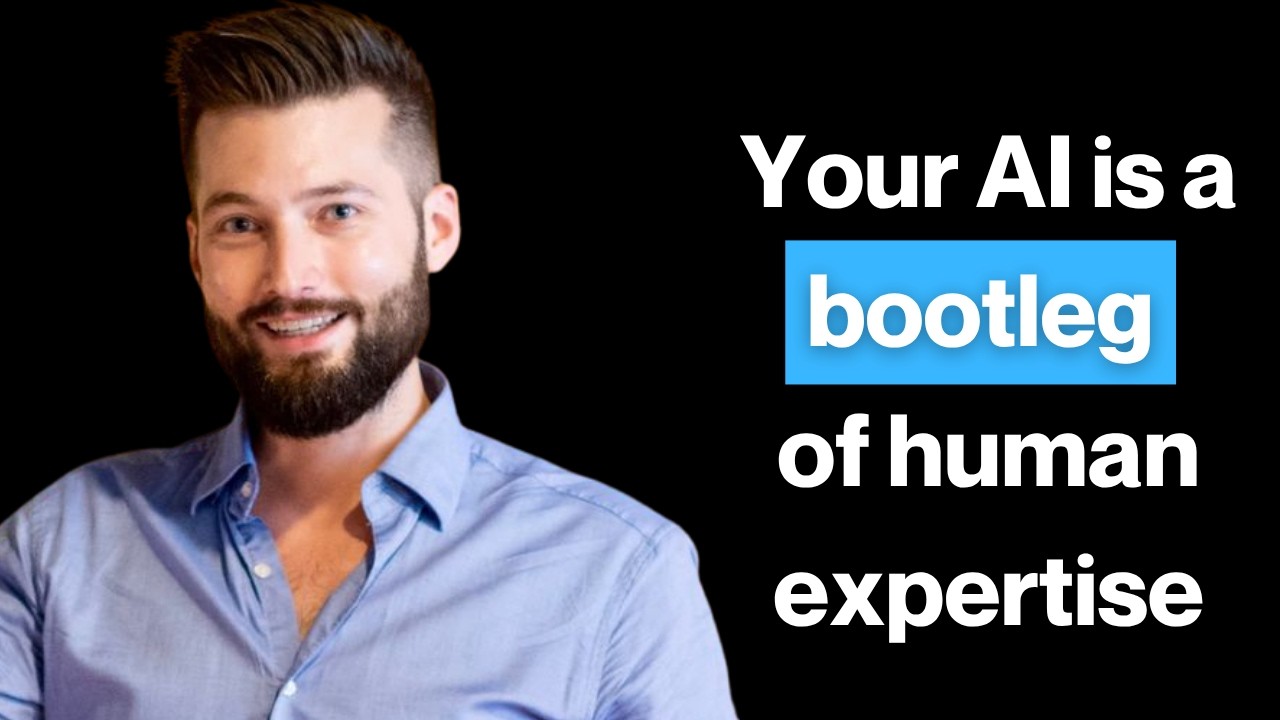
I joined Ayush Prakash on the Ayush Prakash Podcast for a long conversation that started with a simple question: when you ask AI a question, whose answer are you getting?
The Internet Average
My answer, for most of the AI people use today, is nobody’s. A frontier model blends everything scraped from the internet, from the best textbooks to 4chan, into one statistically average smoothie. That works well for transactional questions. It works poorly for the hard, ongoing problems where you would normally go to a specific person you trust, because that person’s judgment was never the thing the model learned.
The Knowledge Experts Never Publish
The part of the conversation I care most about is what we called dark data. An expert’s books and papers capture what they chose to publish. They do not capture the drafts, the memos, or the judgment calls the expert has never had to put into words. Below that is the knowledge that has never left their head. That unpublished layer is often what makes the expert worth consulting.
Dave Rabin, MD, is the example I keep coming back to. Polyvagal theory is standard material: every textbook teaches it, and Wikipedia lists the common view. Dave does not fully subscribe to that view on one point. He had never written it down or even said it out loud. It was simply part of decades of practice. It only surfaced while we built his onix together, and once it did, we made sure his onix reflected it.
At Onix, we start with an expert’s public work, then go deeper into that unpublished material with them. Think of it as the master recording. Every scraped imitation of an expert in a frontier model is the bootleg: copied without asking and lossy. Our version is built with the expert’s consent, on terms they control, and approved by them.
Privacy as a Feature
We also talked about why privacy and usefulness are not a trade-off. A model can only help you with your own situation if it can use your own context, and you will only share that context if it stays yours. That is why we lean on smaller expert models and on-device AI, and why we keep the product in health and wellness rather than medical care.
The business model matters too. We make money from subscriptions, not from engagement. My ideal participant passes the toothbrush test: they open Onix in the morning and at night, get something useful, and close it. We do not need your screen time for that.
Founders, Investors, and One Daily Question
The second half moves to the founder side: how Onix began, why stamina is part of the job, and why the best investors bring an unfair advantage beyond capital. Ayush also asked what keeps me up at night. My answer is a question I ask every day: should Onix exist? Hiring, building, and finding product-market fit are all ways of proving that the answer is yes.
Listen
The full episode is on YouTube, Spotify, and Apple Podcasts. Ayush also shared the conversation on LinkedIn. To meet the experts building on Onix, visit onix.life.